
Tzfat Tzunset - Photography
Between light and darkness: a cloudscape as a Hannukah metaphor.


Hanukkah Light Pouring Over Tzfat
There are sunsets that simply end the day.
And then there are sunsets that feel like a quiet answer.
This one arrived over Tzfat after heavy rains finally washed the city clean. And just as the light began thinning, the hills turning to silhouettes, the sky breaking into bands of ember, ash, and gold. The clouds caught fire not all at once, but in scattered patches, flickering across the sky the way Hanukkah candles do when the oil first takes hold.
It did not feel dramatic in the loud sense. It felt deliberate. Layered. Like the gathering procession of candlelights for Hannukah.
But Hanukkah is not a holiday of overwhelming light. It is a holiday of enough light. One flame against encroaching dark. Then another. Then another.
The sky this evening seemed to reflect back that logic. No single blaze, no uniform glow. Just pockets of brightness, held stubbornly in place against the cooling blue-gray above.
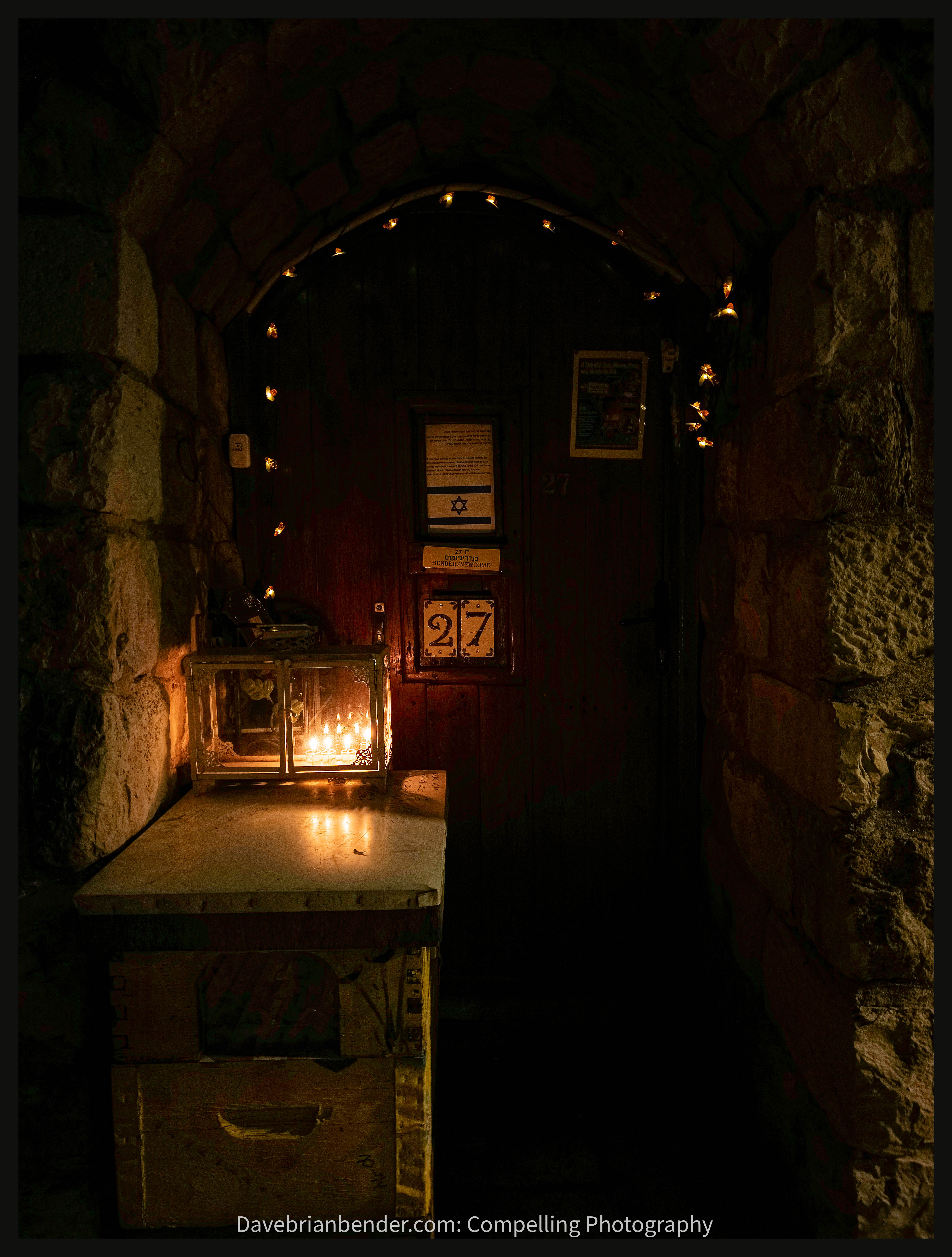
And here's our entrance gate, with our beehive Hannukiah menorah (don't worry: the only honeybees in there are the very softly glowing fairy-light variety 🐝 😉 - like the ones around the arch of the doorway.
Anyway - standing there on the roof for the sunset shot, it was hard not to read the sky as a kind of mirrored menorah. The lower band glowed like fresh-lit wicks, orange and alive. Above it, the clouds softened into cooler tones, blue smoke and silver, as if the day itself were exhaling. The mountains below stayed dark, letting the light do its work without competition.
Tzfat skies do this often, turning weather into commentary.
The Photograph
This image was made without hurry. No tripod - just braced the device against a railing. No bracketing. Just watching the sky long enough to recognize when it stopped changing quickly and began changing meaningfully.
Camera: Samsung Galaxy S24 Ultra
Lens: Main wide lens
Mode: Auto 200mp
ISO: Lowered the exposure to preserve color depth and avoid noise in the clouds.
Shutter: Fast enough to hold texture in the highlights
White balance: Manually warmed slightly in post to reflect what the eye, not the sensor, perceived
Focus: Infinity
I exposed for the sky and let the land fall where it wanted to fall. The hills are not meant to be detailed. They are meant to be quiet. The were a few distracting rooftop solar water heaters at the bottom of the frame, which I cropped out.
Here's the original, for comparison:

Substack’s Stripe payment system isn’t available in Israel, so I’ve arranged an alternative for you to support my work. If you’re feeling generous, you can make a donation via PayPal (or just click the “Coffee Fund” link or the photo if you came here via the email version).
Editing Notes
Post-processing was intentionally restrained.
• Minor contrast adjustment to separate cloud layers
• Subtle warmth added to the lower third to emphasize the candle-like glow
• Highlights gently pulled back to preserve texture
• No artificial saturation boost
• No sky replacement
• No local “drama” sliders abused
The goal was not to make the sunset louder. It was to make it truer.
Why This Felt Like Hanukkah
Hanukkah light is not sunlight. It does not flood. It flickers. It persists.
This sunset carried that same quality. The brightness did not dominate the sky. It survived within it. Each illuminated cloud felt like a wick holding flame just a little longer than expected.
In a season when nights are long and the world feels heavy, that kind of light matters. It reminds you that illumination does not need permission from darkness. It simply needs intention.
Tzfat, as ever, offered that lesson quietly. All I had to do was look up before the candles were lit below.
Outstanding and Riveting ❣️